



Why exchanges are abandoning DAI and what you need to know about the new USDS stablecoin
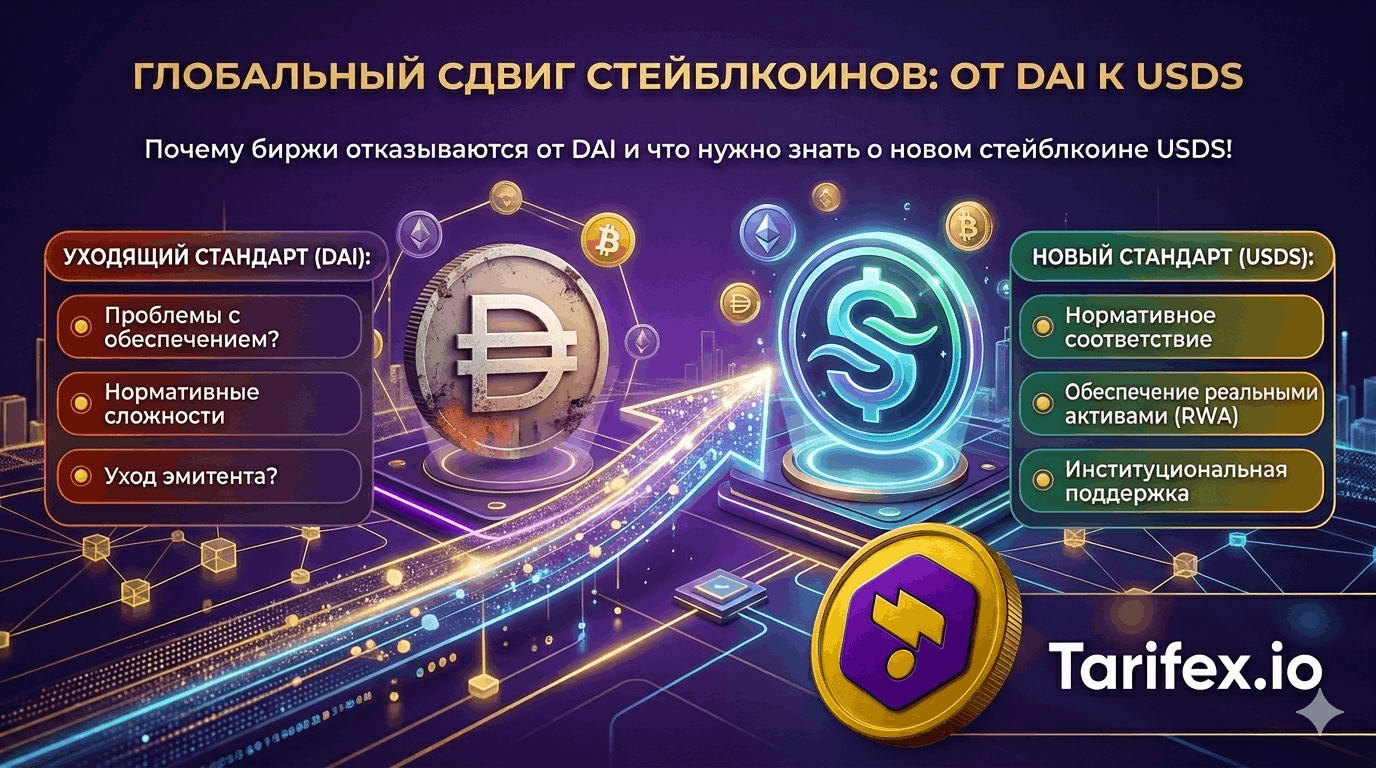
The cryptocurrency market is undergoing a massive structural shift triggered by the decision of MakerDAO, the issuer of the popular decentralized stablecoin DAI, to undertake a deep rebranding and complete overhaul of its ecosystem. The project has officially adopted the new name Sky Protocol and launched a brand new digital asset — Sky Dollar, or USDS — designed to fully replace the classic token in the market. This transition is not merely a rebranding or a marketing tactic, but a fundamental technical evolution that alters the mechanics of the asset's function and compels the entire decentralized finance (DeFi) industry to adapt to new realities.
As a result of this global migration, leading cryptocurrency platforms, global exchanges, and infrastructure providers have begun systematically halting trading, closing deposits, and terminating all support for the outdated DAI token. Platforms are forced to urgently convert user balances to the new USDS standard at a one-to-one ratio to prevent liquidity fragmentation and safeguard client capital. For active traders and long-term investors, this means the familiar stablecoin is effectively being phased out of active circulation, and any attempts to conduct transactions via the old smart contracts are becoming technically unpredictable and carry an extremely high risk of losing funds.
The most critical aspect of this update lies in the architecture of the new USDS token itself, which has introduced controversial changes to the asset's risk profile and sparked heated debates within the crypto community. Unlike the historically decentralized nature of classic DAI, the new stablecoin's smart contract contains a built-in funds-freezing function, granting the issuer the capability for centralized intervention and the blocking of wallets in cases of suspected hacks or illicit activity. While this mechanism significantly enhances institutional security and simplifies interaction with regulators, it fundamentally alters the asset's philosophy, requiring users to adopt a more calculated approach to storing their reserves.
Navigating such technological storms requires market participants to work exclusively with reliable financial partners who prioritize asset security. Amidst such a sharp shift in standards and changes to smart contract logic, the cryptocurrency exchange service tarifex.io is promptly updating its gateways, phasing out support for obsolete trading pairs, and providing access only to secure digital tools. Restricting operations with DAI serves as a necessary protective barrier, shielding investor capital from becoming stuck in outdated networks. By entrusting exchange operations to proven platforms, users guarantee themselves uninterrupted work with up-to-date stablecoins, maintaining high transaction speeds and full conversion transparency even during periods of global market realignment.