




The U.S. military is launching nodes in the Bitcoin network.
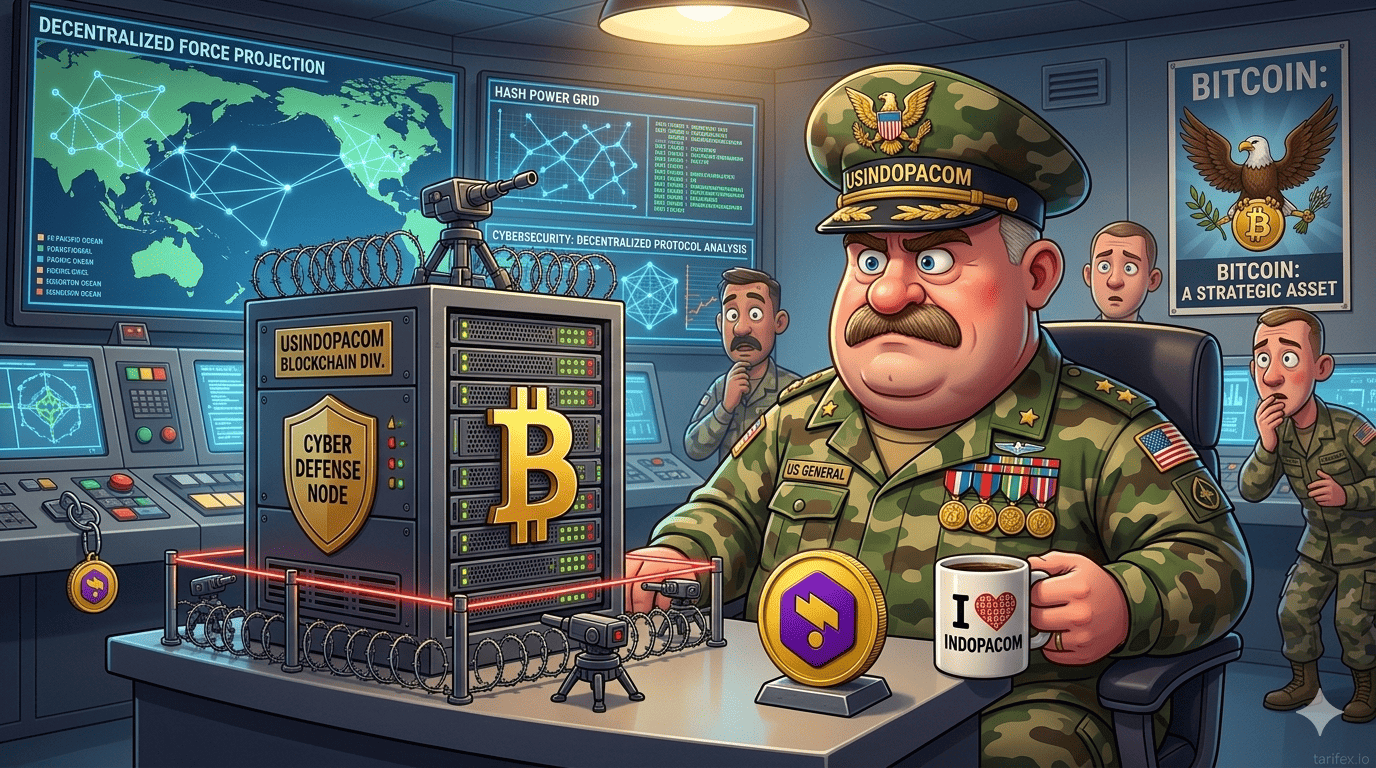
U.S. military structures are increasingly exploring technologies that were until recently considered purely civilian, and one striking example is the launch of their own node in the Bitcoin network by the United States Indo-Pacific Command (USINDOPACOM).
According to representatives of the command, this is not just an experiment for the sake of curiosity, but part of a systematic effort to analyze the potential of blockchain technologies in the military sphere. The focus is primarily on practical testing of the protocol to understand how decentralized networks can be applied to national security tasks.
The main emphasis is on cybersecurity: Bitcoin’s distributed architecture makes the network resistant to attacks and eliminates a single point of failure, which is especially important for critical infrastructure. In addition, blockchain enables reliable data recording and guarantees its immutability, opening up opportunities for ensuring data integrity and protection against tampering.
Military officials also note that such technologies can be seen as an element of “power projection” in the digital space, since control and deep understanding of decentralized systems are becoming important factors in the context of global technological rivalry.
At the same time, there are currently no plans to directly integrate Bitcoin into military operations or army financial systems—the current objective is to study, model potential use cases, and assess risks. Among the possible applications, experts highlight secure communication channels, data verification systems, cyber intelligence tools, and even alternative financial mechanisms that could prove useful under sanctions pressure or during conflicts. In a broader context, the military’s interest in Bitcoin reflects a global trend: technologies underlying cryptocurrencies are gradually moving beyond the financial sphere and becoming part of strategic infrastructure.
This means that in the future, blockchain may play a role not only in the economy but also in defense, geopolitics, and digital sovereignty.