




The State Duma warned about the risks of government regulation of cryptocurrencies!
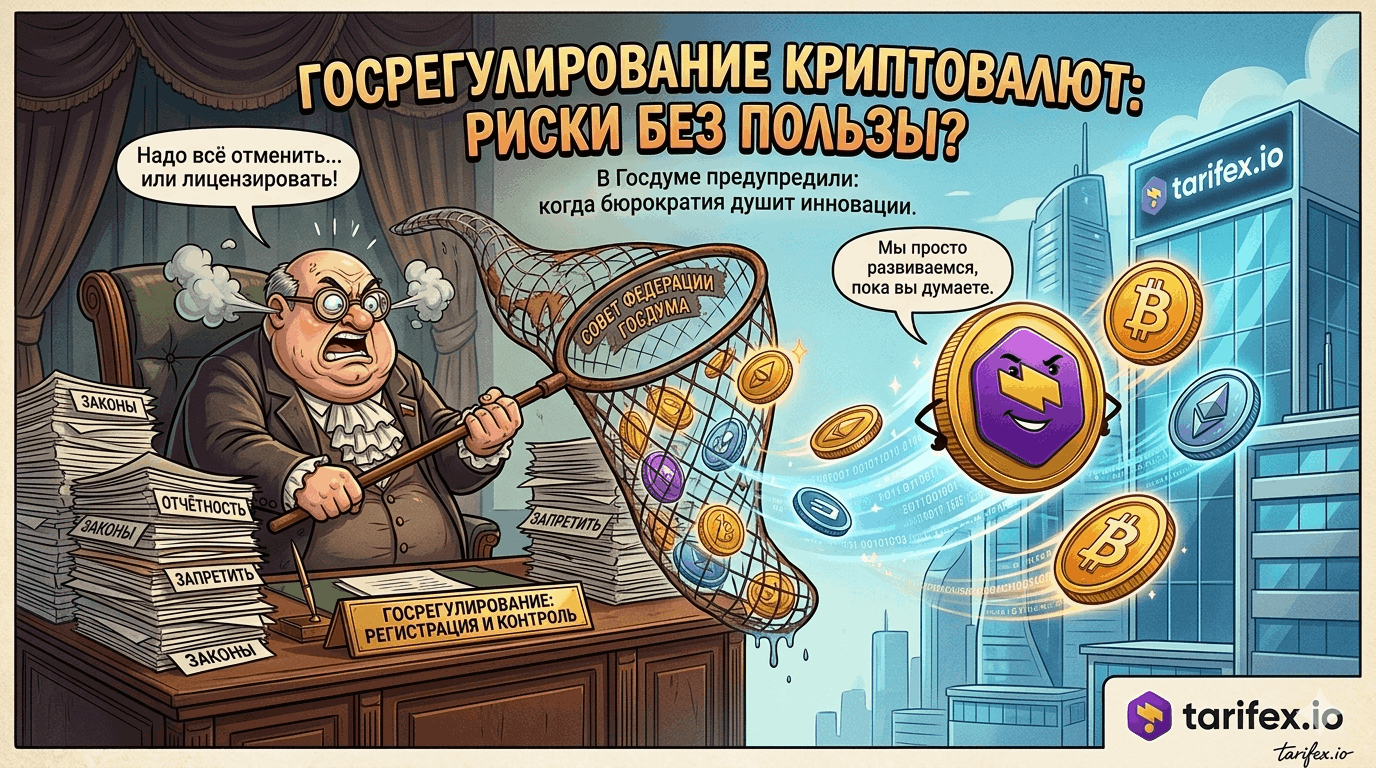
Crypto experts and lawmakers continue to actively discuss the future of digital assets, and a recent statement by representatives of the State Duma has attracted significant market attention. During discussions on cryptocurrency regulation, it was acknowledged that excessive government intervention could not only bring order to the industry but also create additional risks for users and businesses.
According to participants in the discussion, the key issue is that tighter control over cryptocurrency transactions could increase their transparency for external observers, including foreign regulators. Under current sanctions pressure, this could lead to transaction blockages and complicate international settlements. This is especially relevant for companies using cryptocurrencies as an alternative tool for cross-border payments.
It was noted that even now, in a partially unregulated market, centralized crypto platforms are already required to comply with international regulatory requirements. The introduction of stricter domestic rules could strengthen this dependence and reduce the flexibility of financial operations. As a result, cryptocurrencies may partially lose their core function — independence from the traditional financial system.
The discussion is taking place against the backdrop of new legislative initiatives aimed at regulating the circulation of digital assets. These proposals include licensing market participants as well as restrictions for non-qualified investors. In addition, cryptocurrency transactions may only be permitted through authorized platforms, which would increase state control.
Experts believe that such measures could have a dual effect. On the one hand, they could improve market security and transparency, reduce fraud, and better protect investors. On the other hand, there is a risk that excessive regulation could drive users into the unregulated sector, reduce liquidity on legal platforms, and slow down the development of the industry.
Thus, the position voiced in the State Duma highlights the complexity of balancing control and freedom within the cryptocurrency market. The main conclusion is that regulation must be carefully calibrated: excessive tightening could not only restrict users but also create new challenges, including increased sanctions risks and reduced efficiency of international settlements using digital assets.