




The Dark Side of the Crypto Market
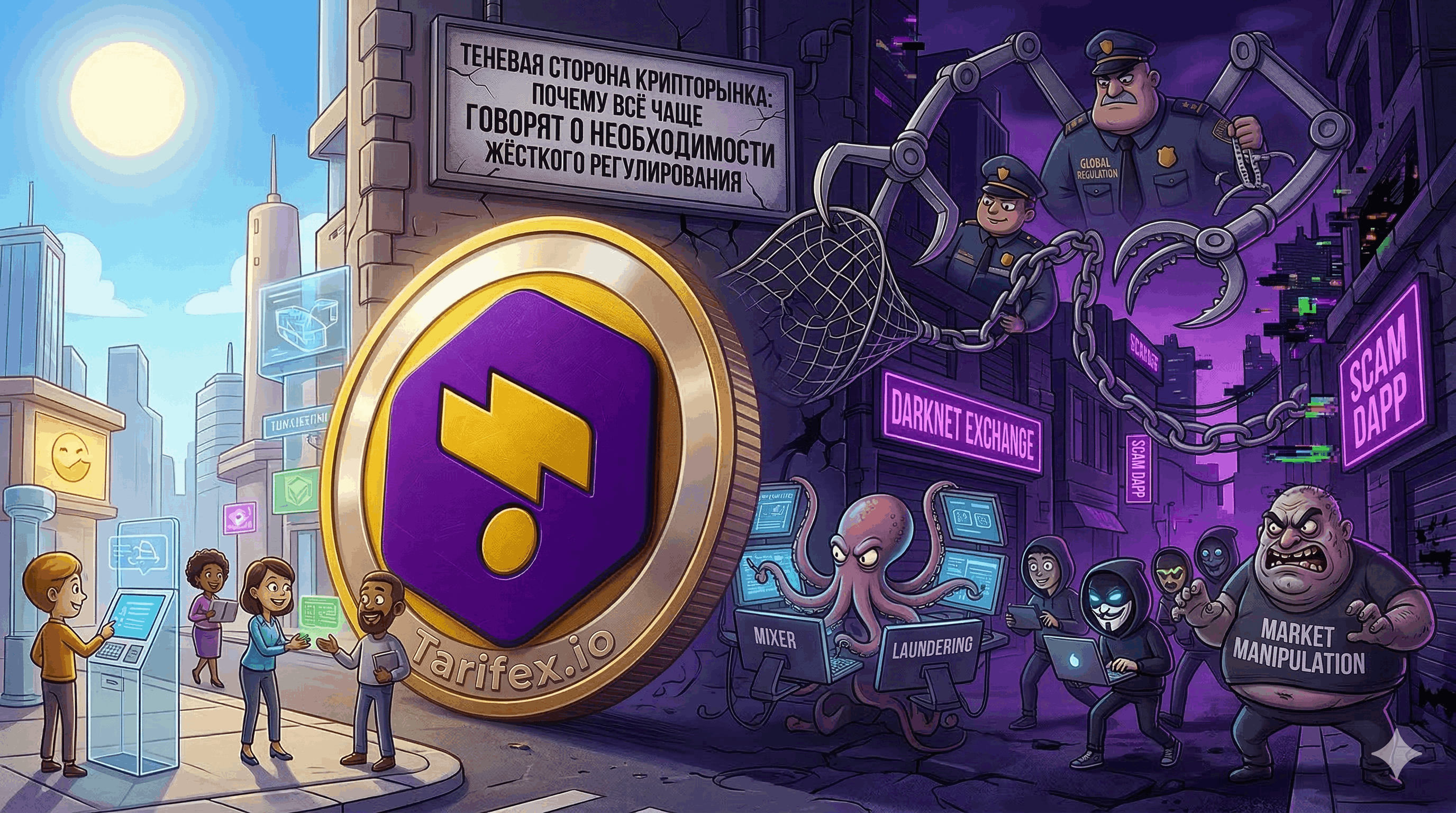
The cryptocurrency market has become one of the most discussed and fastest-growing sectors of the global financial industry in recent years. Bitcoin, Ethereum, and thousands of other digital assets have attracted millions of investors worldwide, while the total turnover of cryptocurrencies is now measured in trillions of dollars. However, along with the rapid growth of the industry, questions about market transparency, the origin of funds, and the need for stricter regulation are being raised more frequently.
One of the key topics of discussion is the so-called “gray” origin of part of the cryptocurrency funds. Unlike the traditional banking system, where transactions pass through regulated financial institutions and are subject to mandatory financial monitoring, cryptocurrency transfers can occur directly between users. This creates an environment where a portion of the market operates outside full regulatory oversight. Experts note that cryptocurrencies are used not only for investments and technological projects but also for anonymous transfers, bypassing financial restrictions, and conducting transactions outside the classical banking infrastructure. For this reason, the crypto sector has long been viewed by regulators as a high-risk environment.
Some analysts believe that a significant share of cryptocurrency transactions belongs to the so-called “gray zone.” This does not necessarily mean direct illegal activity, but rather transactions whose origin is difficult to verify or track using traditional financial mechanisms. According to various estimates, such operations may represent a considerable portion of the global cryptocurrency turnover. This situation raises concerns among regulators and financial institutions, leading to the gradual tightening of rules for the crypto industry.
In recent years, many governments have started actively introducing regulation for the digital asset market. Different countries are implementing requirements for mandatory user identification, transaction monitoring, and licensing of cryptocurrency services. Crypto exchanges and exchange platforms are increasingly required to implement KYC and AML procedures aimed at preventing illegal financial activities. The purpose of these measures is to integrate the cryptocurrency market into the existing financial system and increase the transparency of transactions.
Some experts believe that stricter regulation could play a positive role for the entire industry. According to this view, the market is gradually going through a phase of “cleansing,” during which questionable projects, financial pyramids, and unstable business models disappear. This process may lead to the formation of a more mature and stable cryptocurrency ecosystem, where large financial institutions and institutional investors become the primary participants.
At the same time, the structure of the cryptocurrency market itself is changing. In the early stages of its development, a large share of participants consisted of private investors with relatively small deposits. Today, however, large investment funds, hedge funds, and professional trading companies are playing an increasingly significant role. These players use complex algorithmic strategies, high-frequency trading systems, and expensive software for analyzing market data.
Such technological competition significantly complicates the environment for retail traders. Professional market participants have access to advanced analytical tools, trading algorithms, and infrastructure that allow them to react more quickly to market changes and manage risks more effectively. As a result, cryptocurrency trading is becoming a more professional field where not only capital but also technological capabilities play a critical role.
Some market participants argue that effective cryptocurrency trading today requires substantial financial resources and a well-developed technological infrastructure. Without access to professional analytical tools and automated trading systems, operating in a highly volatile market can involve significant risks. This is why many experts speak about the gradual institutionalization of the crypto market, where most of the liquidity and trading activity is concentrated in the hands of large players.
Despite the existing challenges and ongoing debates about regulation, the cryptocurrency industry continues to develop rapidly. Blockchain technologies are being integrated into the banking sector, investment companies are creating new financial products based on digital assets, and governments are exploring the potential of launching their own digital currencies. All of this suggests that cryptocurrencies are gradually becoming part of the global financial system.
In the coming years, further regulatory tightening and infrastructure development can be expected. For some participants this may represent a limitation, while for others it may create opportunities to operate in a more transparent and stable environment. Ultimately, the future of cryptocurrencies will likely be shaped at the intersection of technological innovation, the interests of major financial players, and government regulatory frameworks. The balance between these factors will determine the further development of the digital asset market.