



"White Triangle": A New Cash-Out Scheme Threatening the Crypto Market!
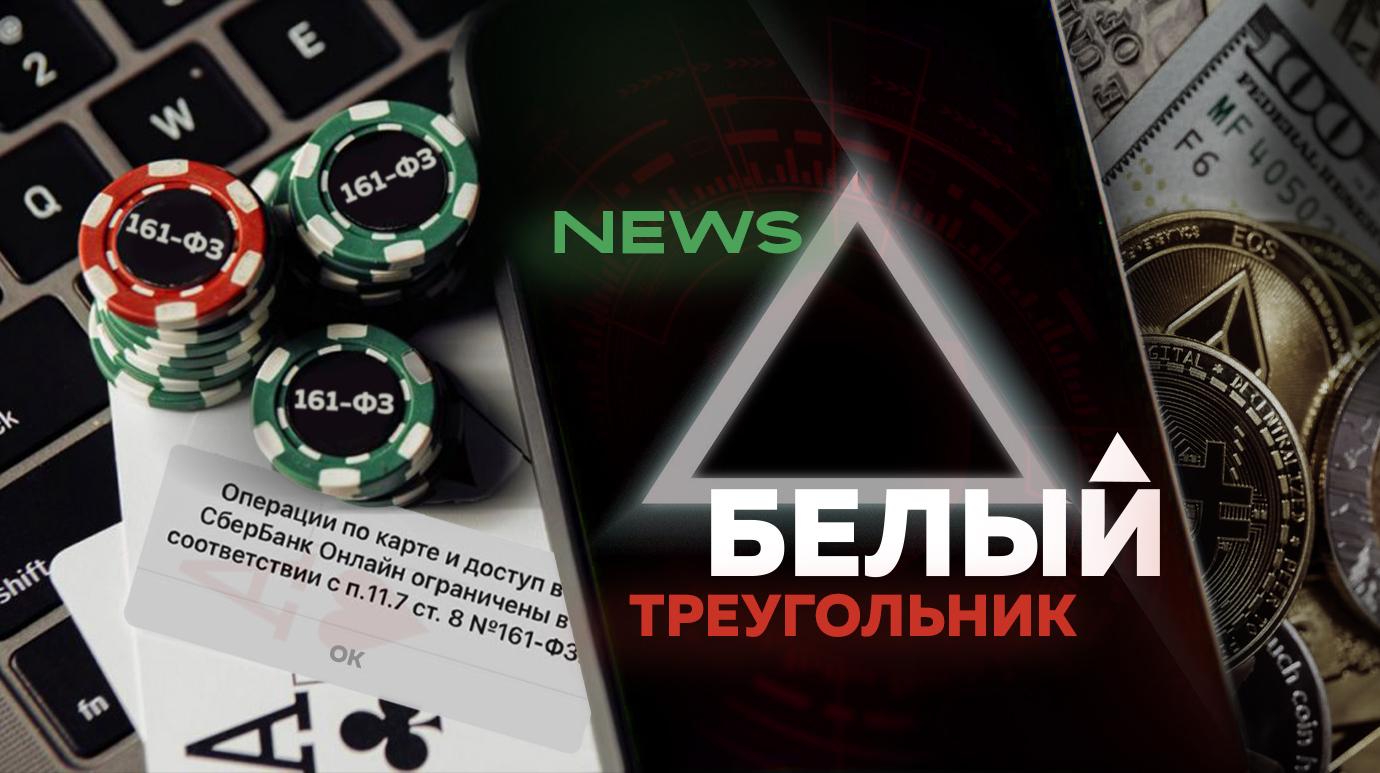
Banks Tighten Anti-Fraud Measures, the Central Bank Warns, and a New Dangerous Scheme Spreads in the Crypto Exchange Market
“White Triangles” disguise themselves as ordinary P2P transactions — but in reality, they draw users and exchanges into money laundering schemes.
What Are “White Triangles”?
In recent months, a new scheme has emerged in the cryptocurrency exchange market, informally called the “White Triangle.” Participants present it as a legitimate way to buy crypto through online exchangers, but behind the scenes lies a carefully constructed network for masking shadow transactions — including those linked to illegal casinos, call centers, and drug marketplaces.
After the law introducing criminal liability for money mules and money mule recruiters came into force, old “black” processors lost access to banking operations. To stay in business, they switched to P2P platforms and exchangers, using them as a cover.
How the Scheme Works
A regular user creates an application to exchange cryptocurrency. Their bank details are passed down the chain — to processors connected with shadow services. Casino players or other senders see these details as “available for deposit” and begin transferring small amounts — usually 2,000–3,000 rubles each.
All transfers are verified via receipts using specialized software. As a result:
- Casinos gain the ability to accept deposits,
- The exchanger earns a 7–10% commission instead of the usual 0.5–1%,
- The client receives funds on their card.
From the outside, everything appears legitimate — but in fact, it’s money laundering involving unsuspecting individuals.
Why It’s Dangerous
The main trap of the scheme lies in delayed consequences. Problems may arise only 3–6 months later, when the participant barely remembers the small transfers they received.
When a casino player loses money, they may claim to the bank that the transfer was unauthorized. As a result, the bank blocks the recipient’s card — often along with all their accounts. Then, under Federal Law No. 115-FZ, the person is added to the list of suspicious clients.
If the amounts are large, the case may reach law enforcement: investigations are launched for fraud and money laundering. Thus, an ordinary user can become a suspect — even if they only “sold some crypto.”
Worse yet, the scheme often involves even darker money flows — from fraudulent call centers or drug markets. In such cases, the liability is far more serious, up to real prison terms.
Who Suffers from “White Triangles”?
Everyone does.
- Ordinary users lose their bank cards, reputation, and access to financial services.
- Exchangers, tempted by high margins, risk criminal prosecution and business collapse.
- The market infrastructure also suffers: aggregators face a flood of complaints and loss of trust, while banks tighten control over all crypto-related transactions.
All this may lead to mass account blocks and restrictions on the entire P2P model.
Regulators’ Position
The Central Bank of Russia has officially warned about “White Triangle” schemes, noting that participants may face criminal liability.
The regulator emphasizes: any transfers with unusually high commissions and multiple small incoming payments from different senders are considered suspicious and are automatically monitored by banks.
Who Stays on the “Bright Side”?
Amid the rise of gray schemes, it’s important to remember that law-abiding players still exist in the market — those who follow regulations and comply with all legal standards.
One such platform is Tarifex.io — a service that strictly refuses to participate in dubious operations or handle “triangular” traffic.
Why Tarifex.io Stays on the Bright Side:
- Works only with licensed partners and verified financial institutions;
- Uses certified payment gateways with transparent fund origins;
- Fully complies with KYC / AML standards and Russian legal requirements;
- Guarantees security, fund protection, and reputation for its users.
While the market is turbulent, Tarifex.io remains one of the few platforms where cryptocurrency exchange is legal, safe, and free from blocking risks.
What Exchangers and Users Should Do
For exchangers:
- Reject any offers involving unusually high commissions or opaque transaction sources;
- Verify partners and monitor the origin of funds;
- Educate clients about potential risks.
For users:
- Be cautious — do not accept multiple small transfers to your card;
- Avoid exchangers offering suspiciously favorable rates;
- Never agree to operations that seem “too good to be true.”
Key Takeaway
“White Triangles” are not a new business model, but a mutated version of old cash-out schemes. Today they bring easy profits — but tomorrow they lead to blocks, investigations, and damage to the entire market’s reputation.
Choose trusted services like Tarifex.io — where rates are fair, partners are licensed, and transactions go through legal payment channels.
Call to Action
Exchangers, traders, and clients must consciously refuse to participate in “White Triangle” schemes. Any transaction with an unverified source can cost you your business, freedom, or reputation.
Stay on the bright side.
A short-term gain today means blocks and interrogations tomorrow — and the collapse of the industry the day after.
Work only with transparent and secure platforms like Tarifex.io, where integrity and safety are more than just words.