




Bitcoin is approaching the end of the year in an unusual mood for itself.
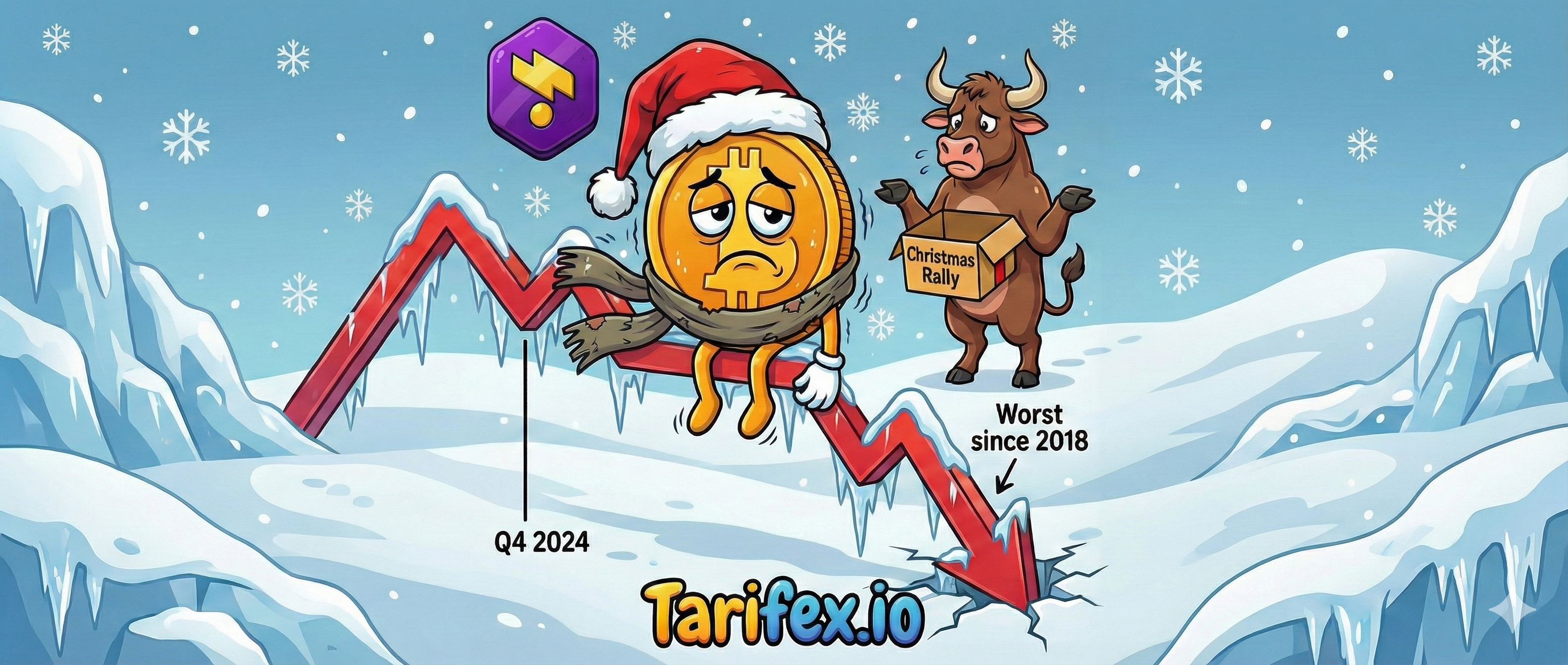
Bitcoin is approaching the end of the year in an unusual mood. According to data from the analytics platform CoinGlass, the fourth quarter has become the weakest for the leading cryptocurrency since 2018. Over the past few months, the price of BTC has dropped by more than 20%, wiping out expectations of the traditional “Christmas rally” that the market had grown accustomed to in previous years.
Back in early autumn, Bitcoin was trading near local highs, demonstrating a confident upward trend. However, as the end of the year approached, selling pressure increased noticeably. The correction turned out to be deeper than many market participants had expected, and investor optimism gave way to caution. As a result, the fourth quarter — which has historically often delivered gains — became a disappointment for bulls this time.
Traditionally, the final months of the year have been considered favorable for Bitcoin and the crypto market as a whole. During this period, investors often expected rising prices and growing interest in digital assets. However, in the current market cycle, the seasonal factor failed to play out, clearly illustrating a shift in overall market dynamics.
Analysts attribute the situation to several factors. A key role is played by broader macroeconomic uncertainty: investors around the world are increasingly reducing exposure to risk assets in their portfolios, opting for a more conservative, wait-and-see strategy. Additional pressure comes from high volatility in the crypto market, where sharp price swings have become commonplace.
In such conditions, access to timely analytics and high-quality market data is becoming increasingly important. This is why market participants are turning more often to specialized services such as tarifex.io, which help track key market indicators, analyze cryptocurrency price dynamics, and make more informed trading and investment decisions during periods of heightened uncertainty.
At the same time, the current decline does not necessarily signal the end of Bitcoin’s long-term trend. Some experts view the situation as a large-scale correction following strong growth in previous periods. Similar cooling phases have occurred more than once in BTC’s history and have often laid the groundwork for subsequent recoveries.
Nevertheless, the fact that Bitcoin is ending the year with its worst quarter in the past six years has already become an important signal for traders and investors. It highlights the need for a more cautious approach to risk management and a move away from blind reliance on seasonal patterns.
The year-end performance once again shows that the cryptocurrency market remains cyclical and highly sensitive to external economic and geopolitical factors. And although Bitcoin has repeatedly proven its ability to recover after difficult periods, the current situation requires market participants to remain attentive, flexible, and to use modern analytical tools to assess potential future scenarios.